Creating Connections in Pawtucket: The Tidewater Riverway Initiative
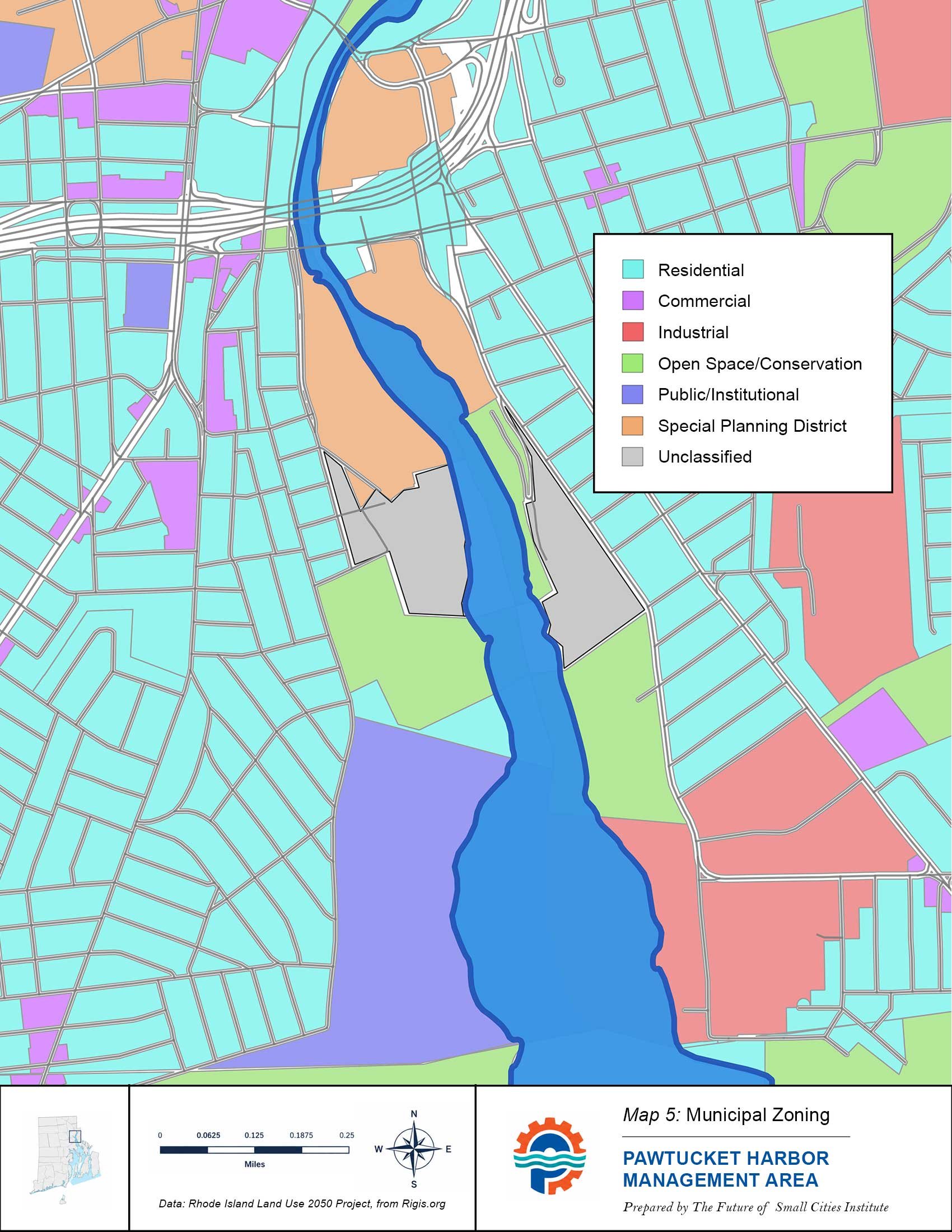
The Future of Small Cities Institute has begun working with the City of Pawtucket on the Tidewater Riverway Initiative, a multi-pronged effort to activate Pawtucket’s riverfront and to advance a regional stewardship strategy for the the entire Blackstone River corridor, in partnership with the five communities of Cumberland, Central Falls, Cumberland, Pawtucket, Providence, and East Providence. The Initiative is grounded in a simple but powerful idea: that the Blackstone and its watershed rivers are not merely a collection of properties and public spaces, but a connected civic landscape whose future should be shaped deliberately, collaboratively, with a longterm vision for a thriving regional community.
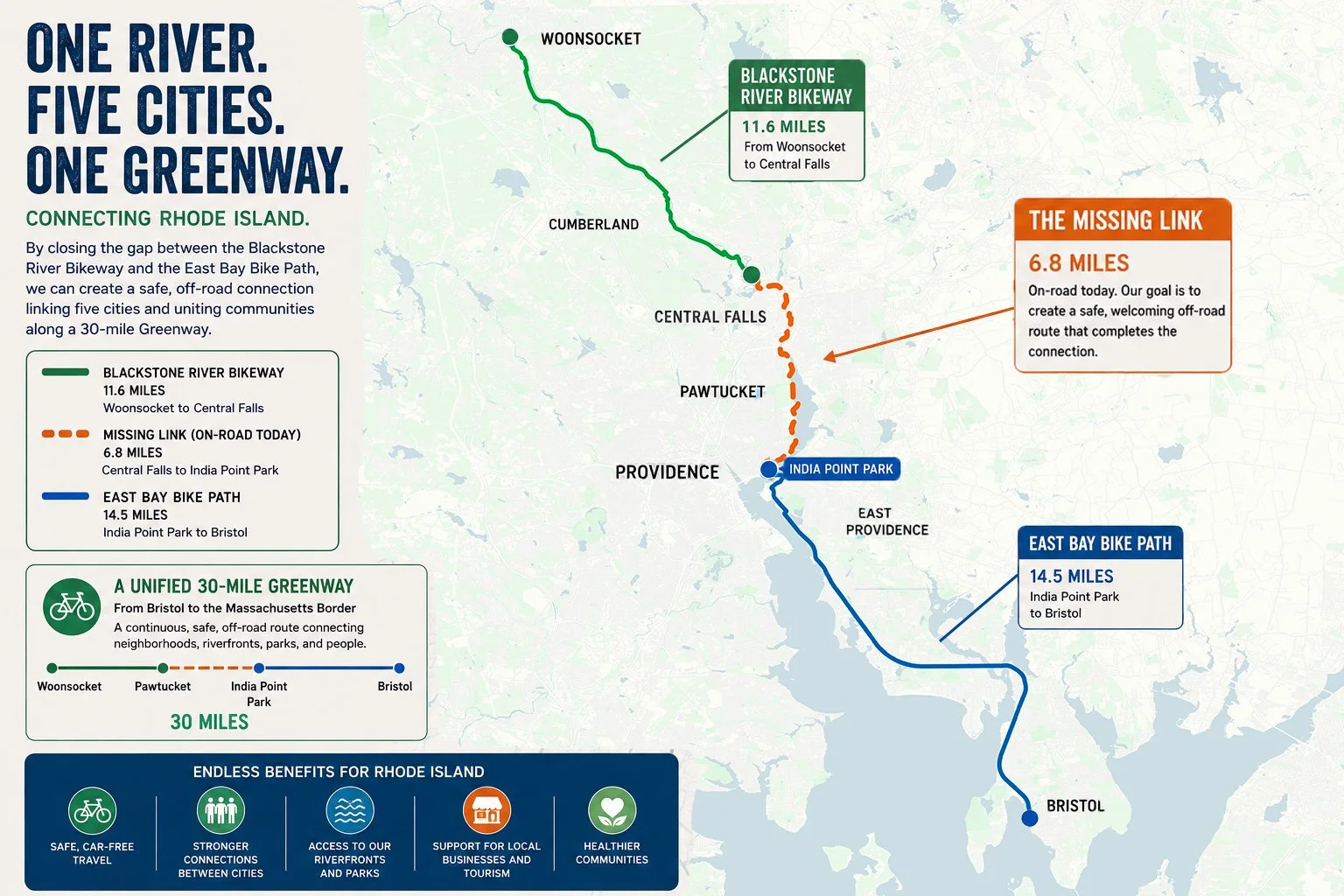
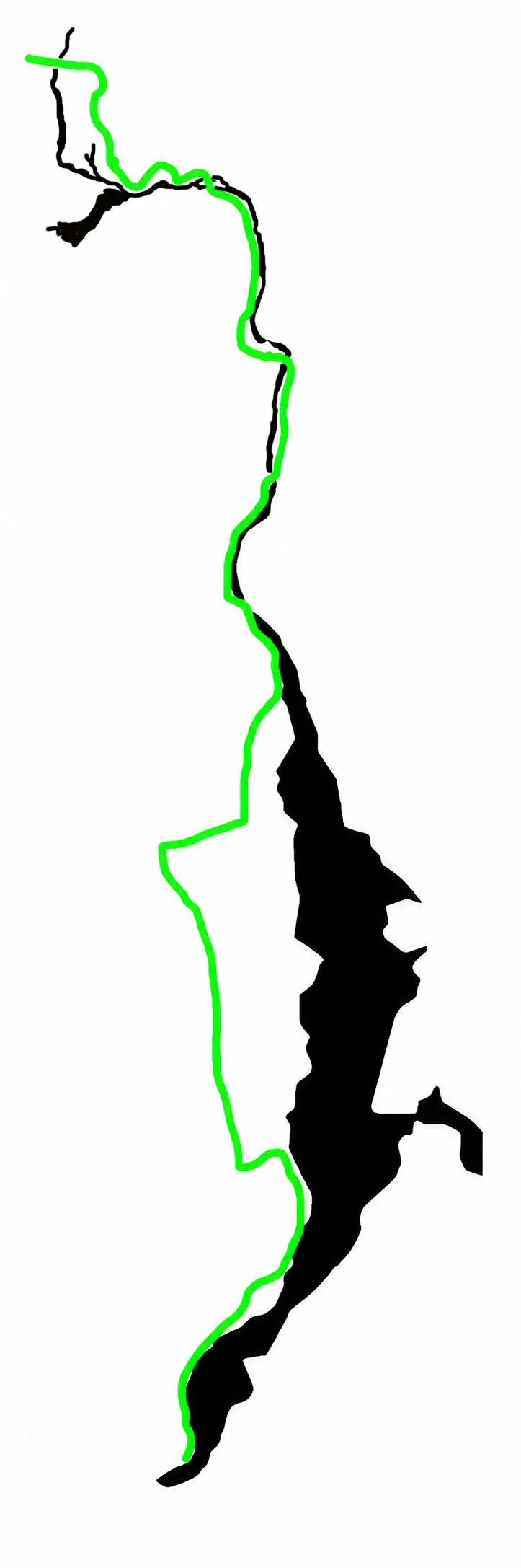
The missing link, from Cumberland to Providence.
The Greenway
As part of this five-city collaboration, FoSCI is helping a regional group of planners, thinkers, and doers to finally finish the Blackstone River Greenway. This trail has two long off-road sections already completed from Woonsocket to Cumberland (Blackstone River Bikeway) and Providence to Bristol (East Bay Bike Path), but is missing a critical seven-mile stretch from Cumberland to Providence that runs through the heart of Central Falls and Pawtucket. There has been a decades-long effort to complete this trail, and the finish line is finally within sight. Several important challenges remain and the dense, urban landscape offers plenty of complex engineering points, but all of these problems are solvable, particularly with a regional coalition on the case.
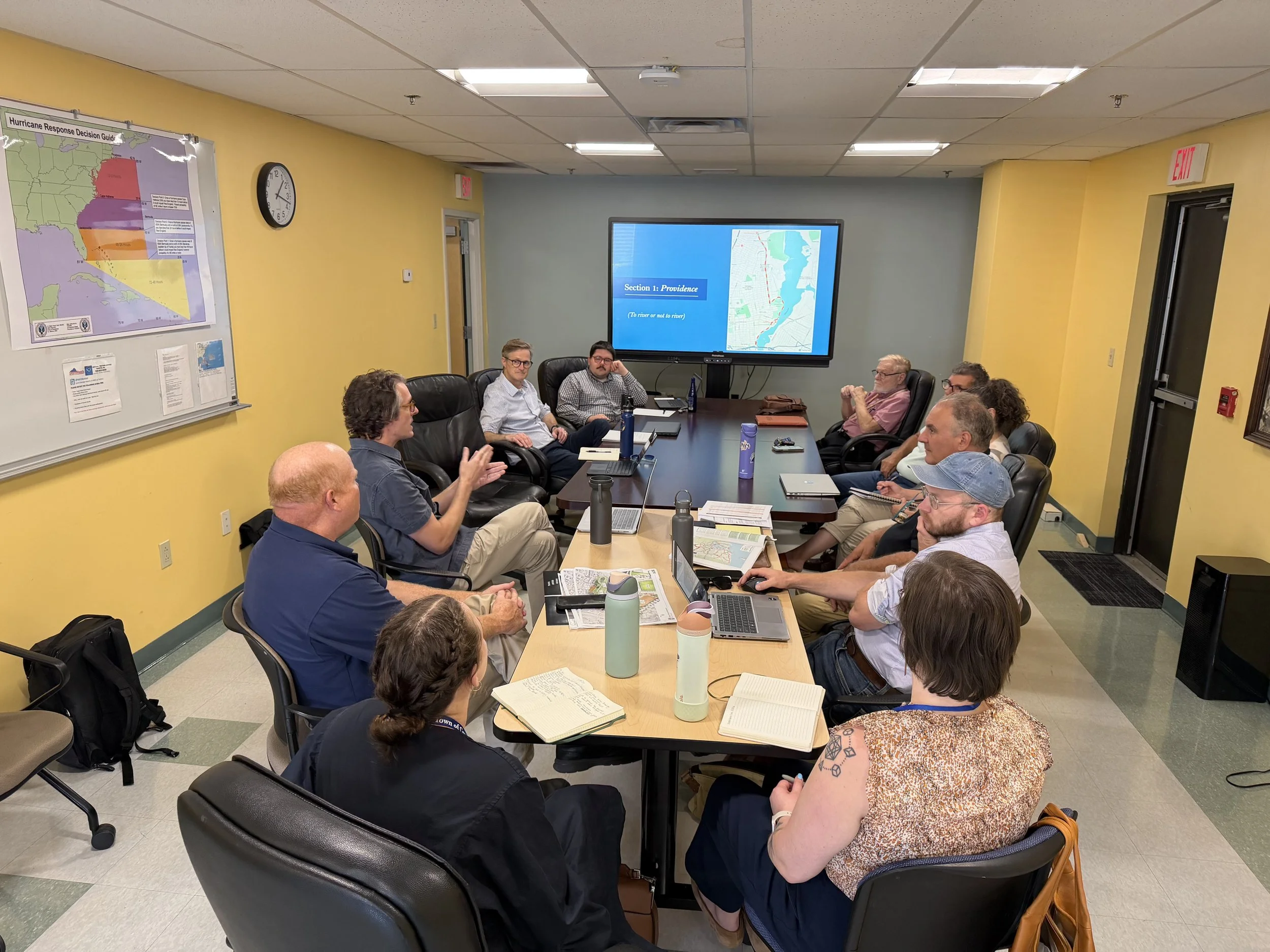
Planners from up and down the corridor came together in Central Falls.
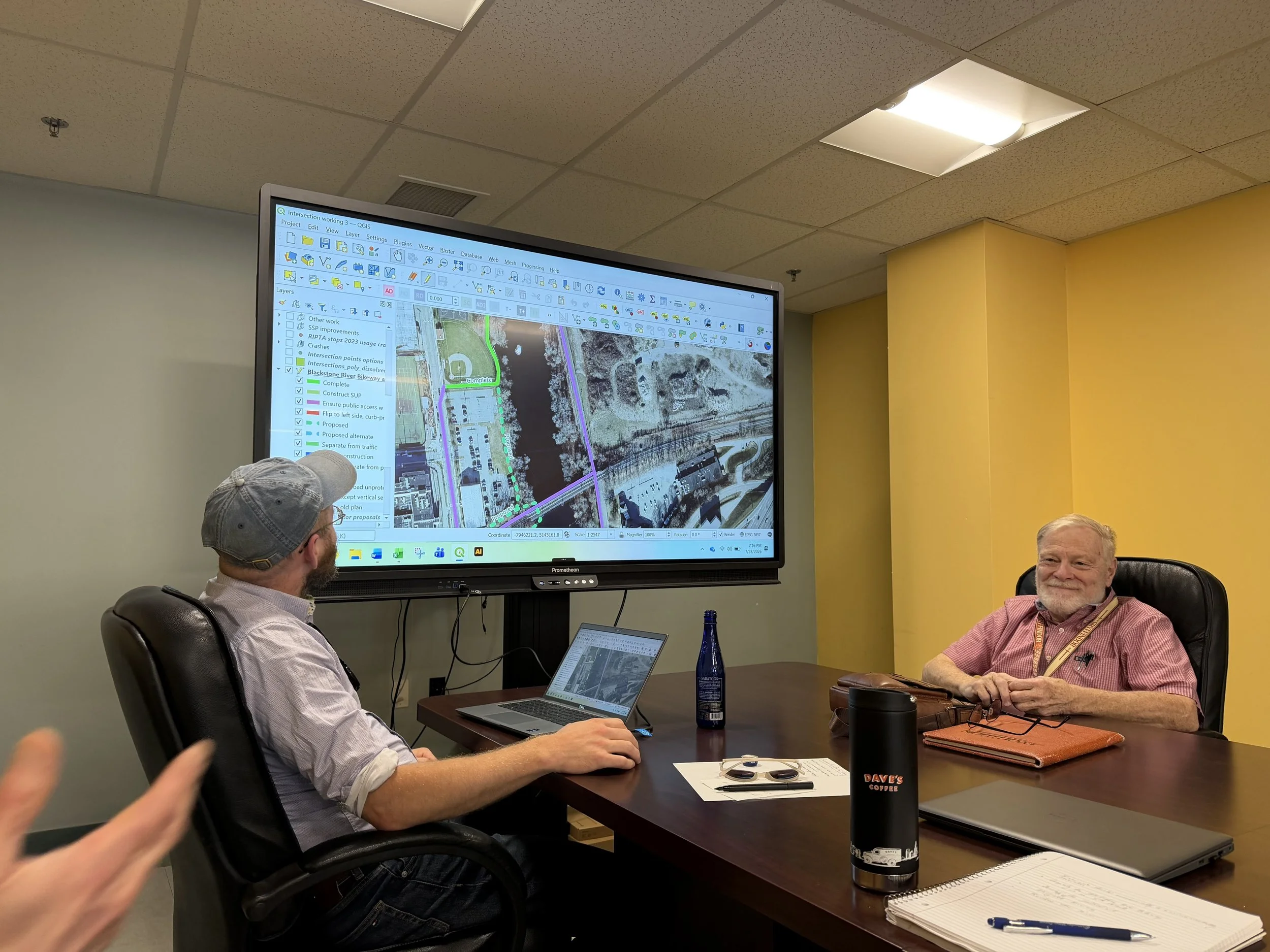
Providence Planner Alex Ellis builds a GIS map of the trail in real time.
The Future of Small Cities helped run a very productive planning and knowledge-sharing meeting between planners across the five communities in July. So much work is being done up and down the corridor! Pinch points were identified, plans and visions were swapped, wisdom dispersed. The collective is stronger than any city on its own and the hope is that this group can seek out new, larger funding sources that they wouldn’t otherwise be able to access without the regional effort.
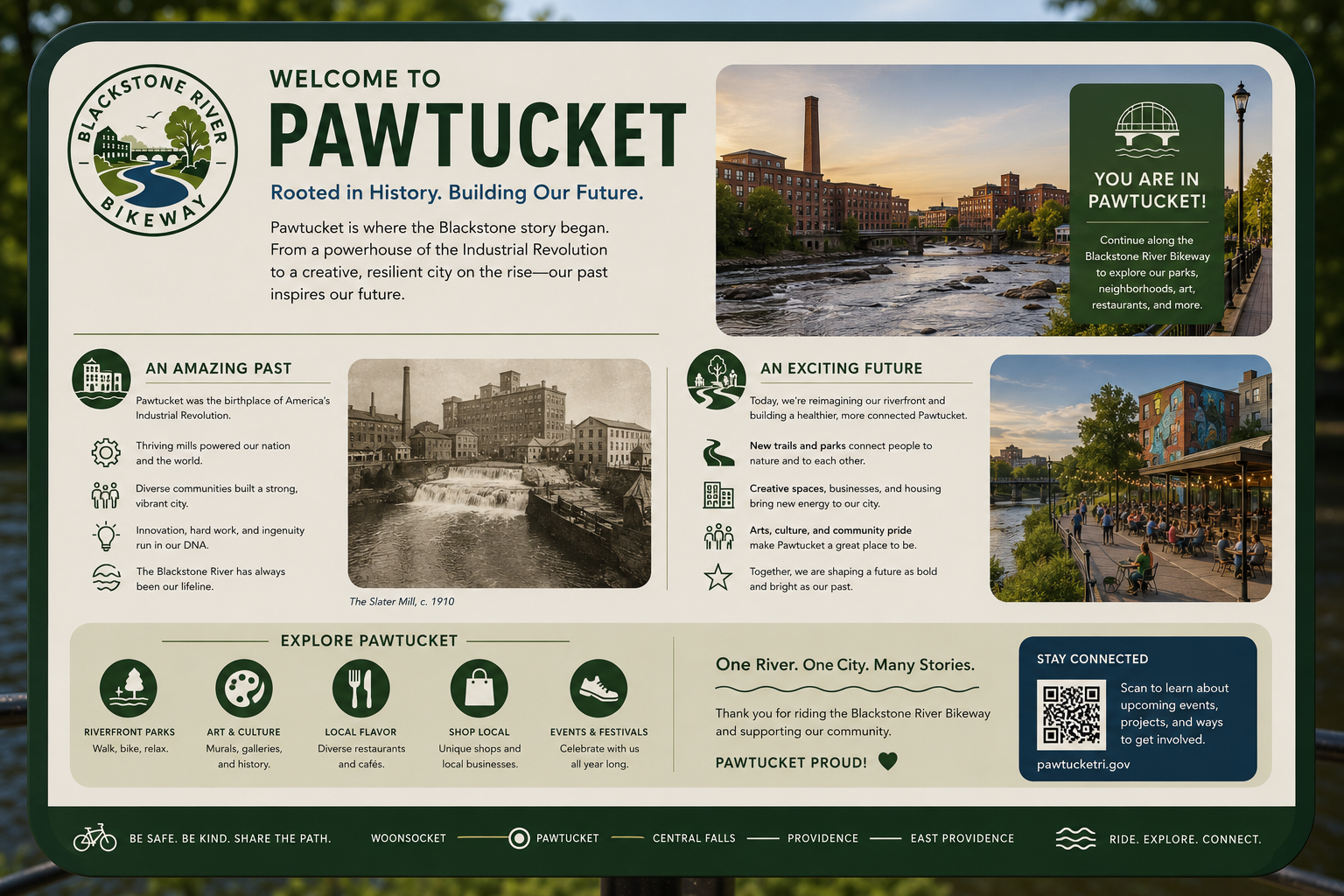
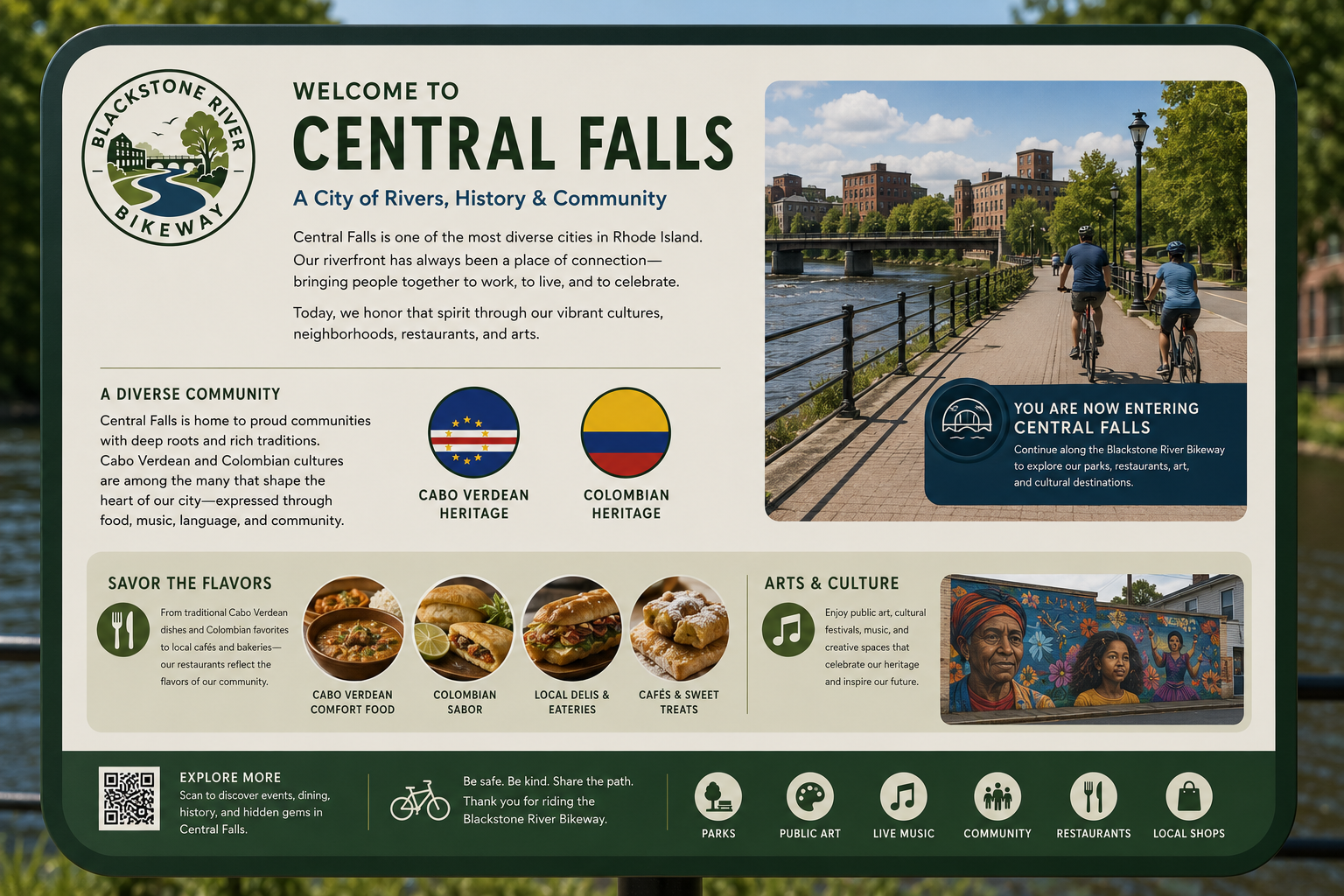
The Greenway is more than just a transportation route: it is a cultural and civic through-line, a connective spine across the state that brings people to often under-utilized shorelines in all these communities. The path will be mixed-used—for walkers, runners, bikers, families, thinkers, poets, and the just-married. It will be an educational space for the newly-arrived and the been-here-for-years. It will be a daily ritual, a revelation, a hello-there, a meeting spot, a way through and a way into.

A tactical urbanism project by the Tidewater Riverway Initiative.
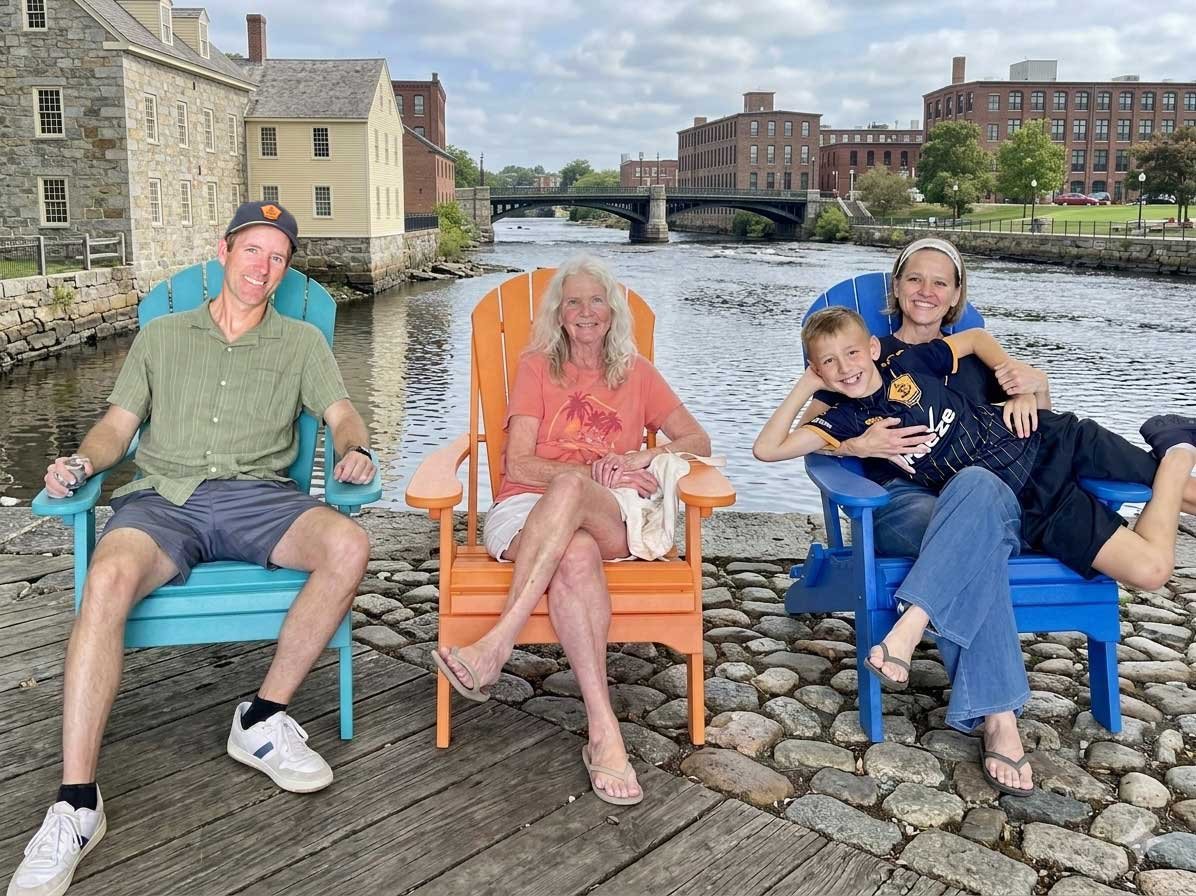
21 Adirondack chairs (in city colors!) will be place along the riverway.
Have a Seat!
FoSCI is also helping to enact some tactile urbanism on Pawtucket’s waterfront, including installing 21 colorful Adirondack chairs in three locations, part of the “Have a Seat, Pawtucket” initiative. Residents can scan a QR code and share pictures of them sitting in the chairs as well memories, ideas, and questions they might have about the riverfront. Pamela Hughes, chair of the Pawtucket Riverfront Commission, is spearheading the effort.
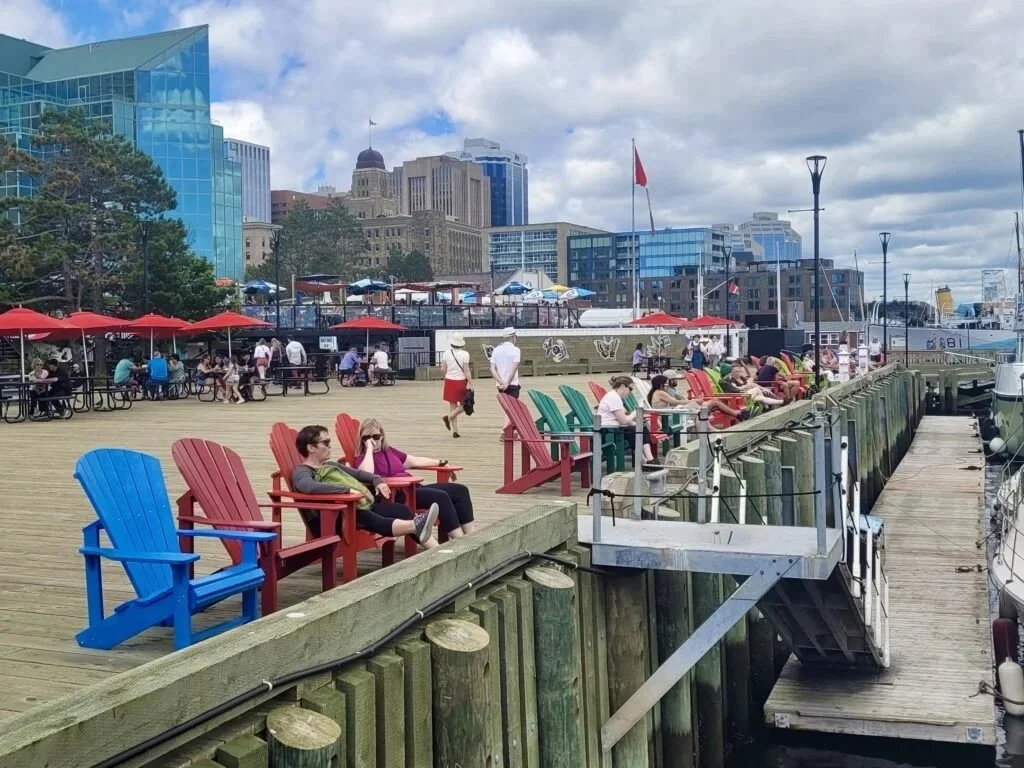
Adirondack chairs on the Halifax waterfront.
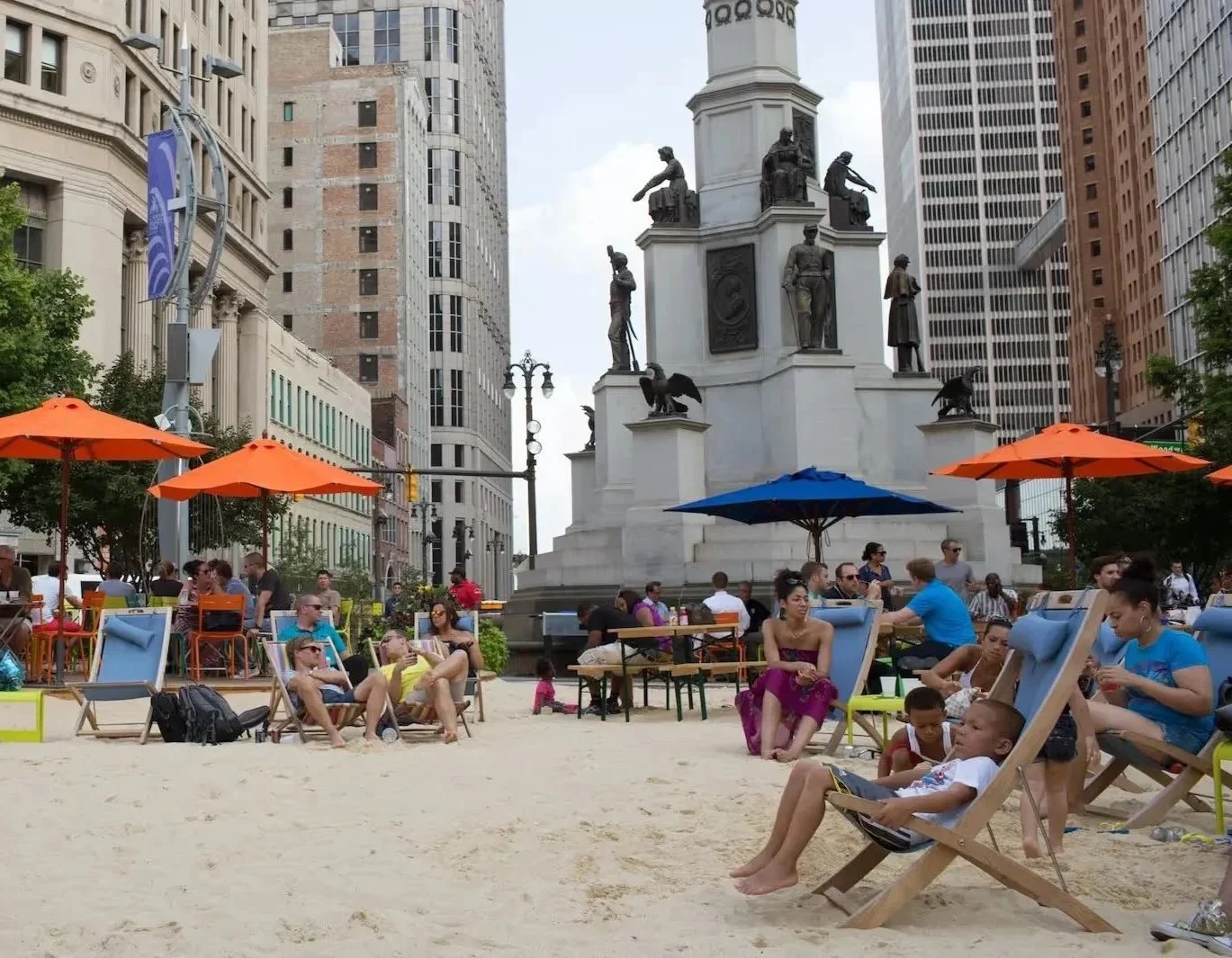
The Beach at Campus Martius in Detroit
“People tend to sit where there are places for them to sit,” said the great urbanist William H. Whyte. Indeed, there are many great examples of cities that have used to chairs as a powerful placemaking tool including Halifax, Detroit, and Zurich, which has turned benches into art projects. Chairs give people permission to linger. Chairs frame a view and say, “This place is worth looking at.” Chairs create places. And moveable chairs invite residents and visitors to be participants in their own story.
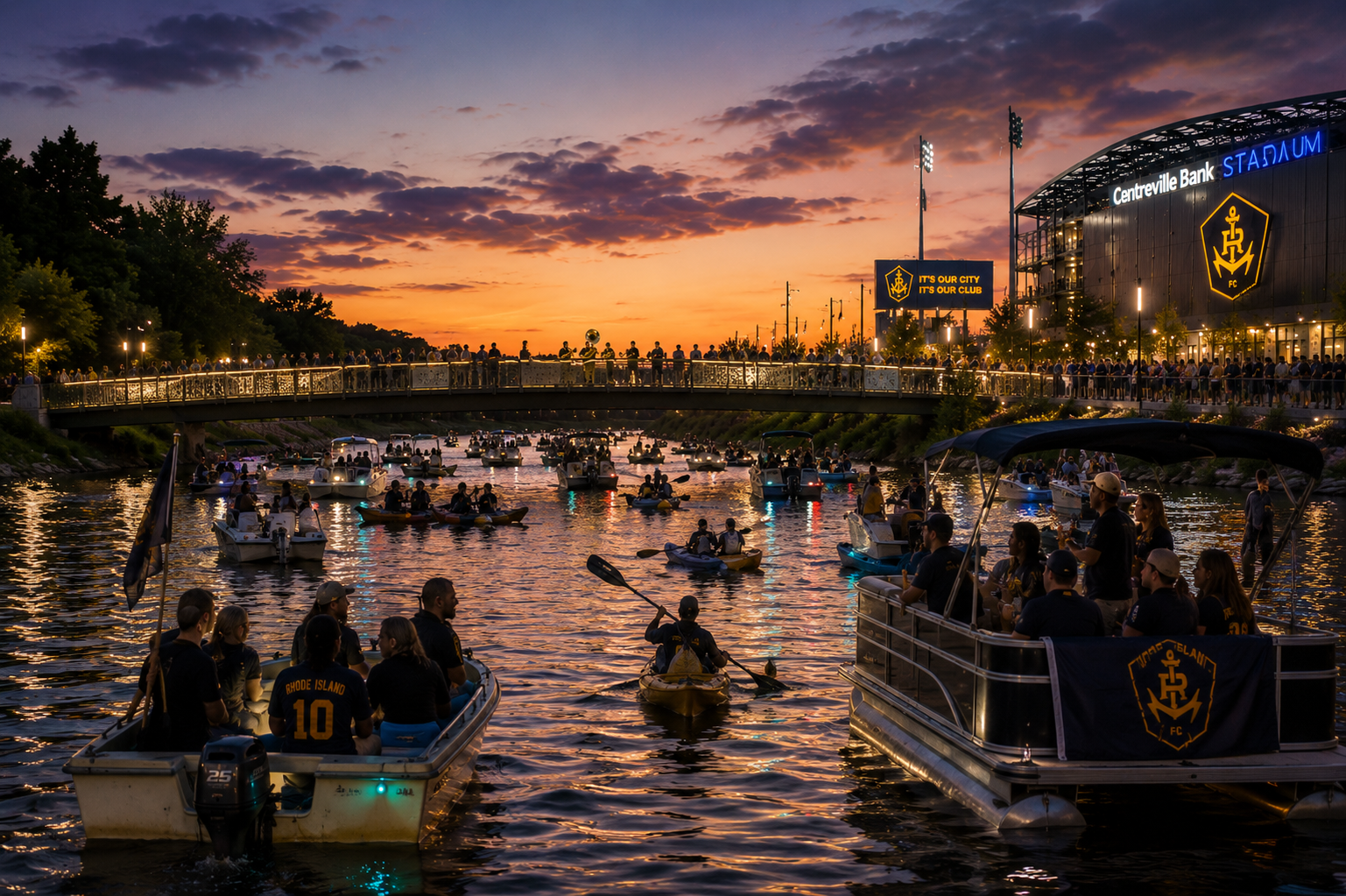
Rendering of an active Pawtucket River after a RIFC game at Centreville Bank Stadium.
The River as Gateway
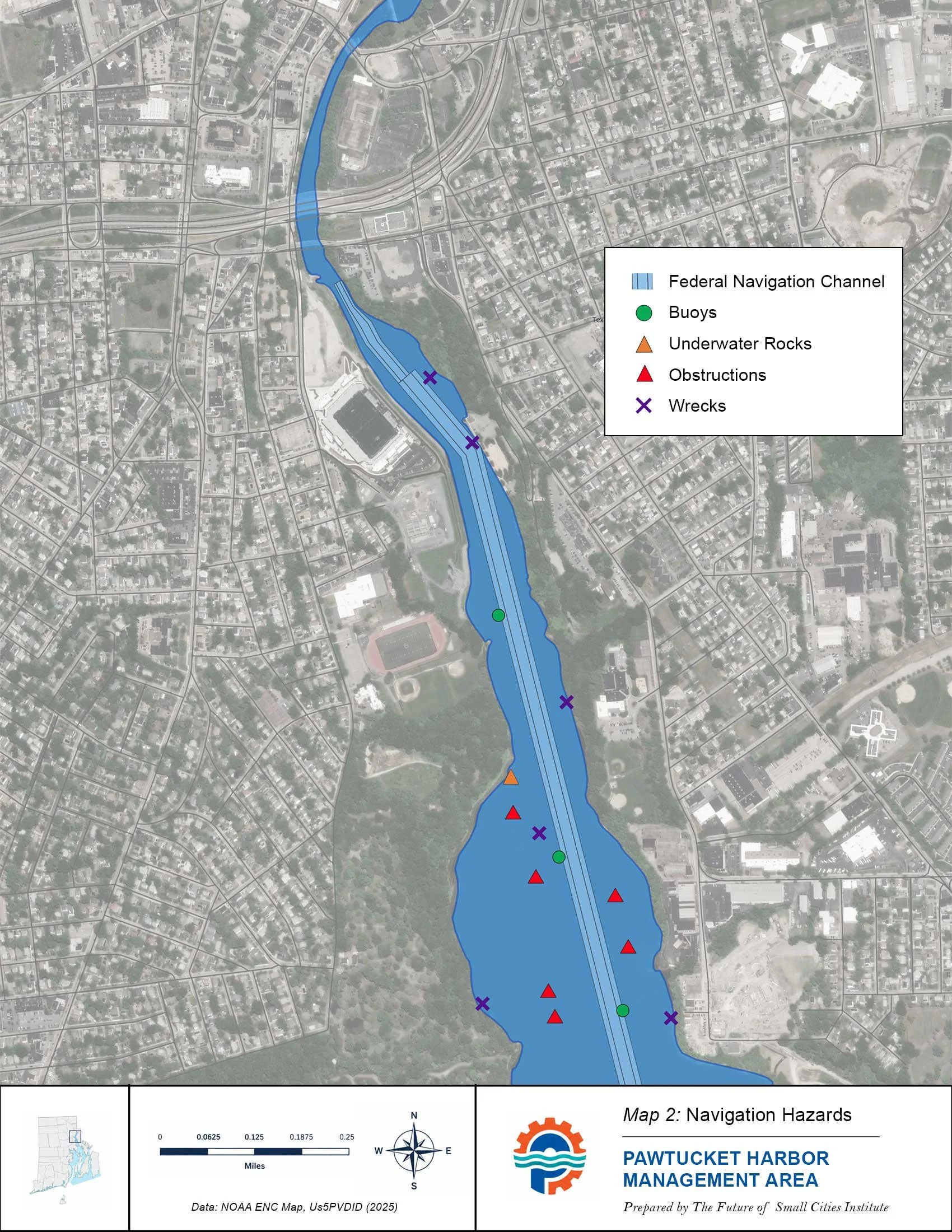
As part of the Tidewater Riverway Initiative, FoSCI is also working with Bob Billington to develop a Pawtucket Harbor Integrated Management Plan that will dredge the Pawtucket River and allow boaters to travel all the way up the river from Providence to the soccer stadium at Tidewater Landing and beyond, unlocking a new corridor for Pawtucket to connect with the world.