
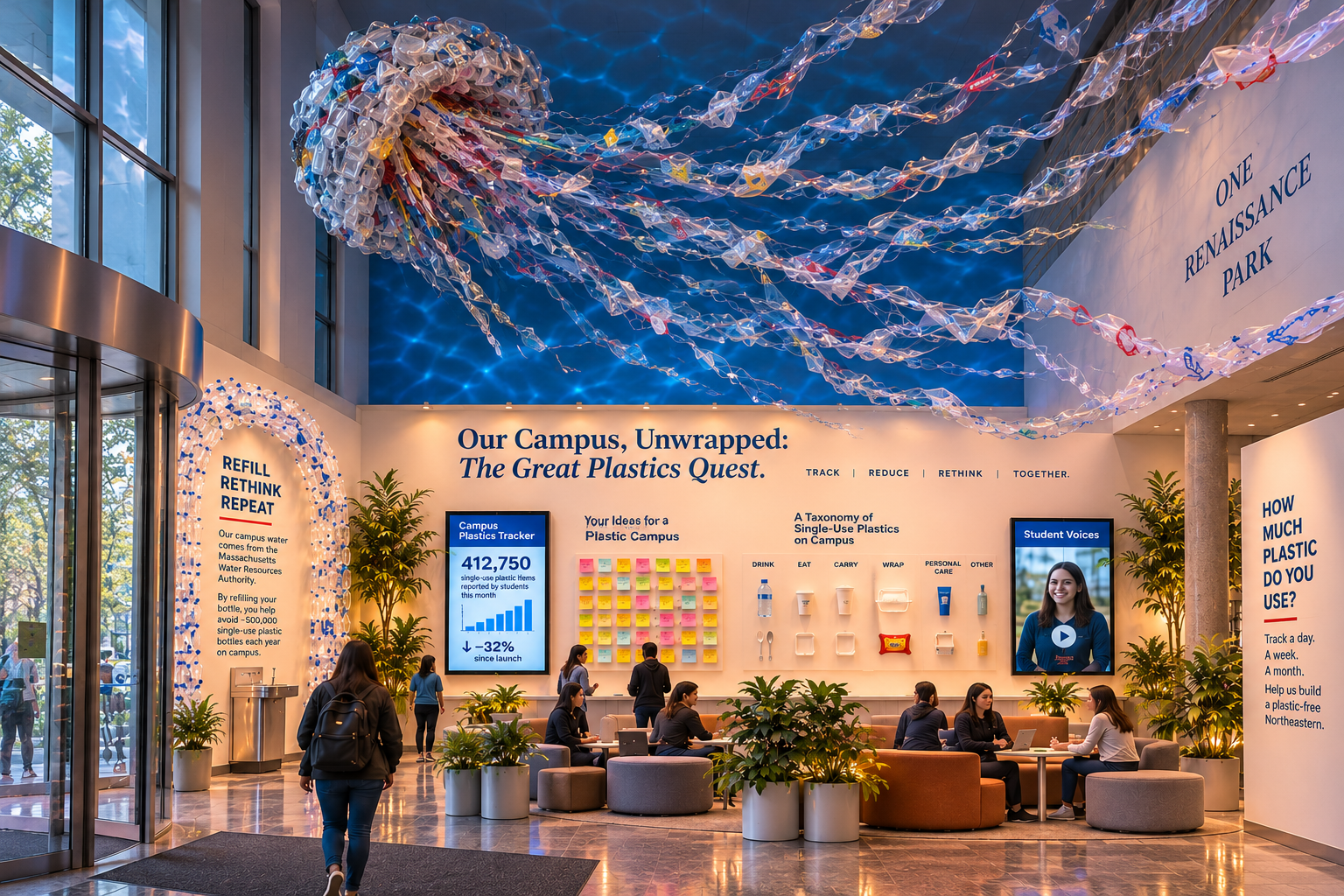
Conceptual Rendering of Material Futures Exhibition
What would it take for a university to become plastic-free? Where would it begin—with the coffee cup, the research lab, the campus dining hall? And how would we know whether the alternatives were actually better?
Reif Larsen of the Future of Small Cities Institute is collaborating with Northeastern University’s School of Public Policy and Urban Affairs and The Plastics Center as creative lead and curator of Material Futures, Rethinking Plastic: Towards a Plastic-Free Northeastern. Opening in the lobby of Renaissance Park in February 2027, in time for Northeastern’s Sustainability Innovation Week, this large-scale exhibition will bring together science, policy, art, and student investigation to explore what “plastic-free” actually means—and whether a campus like Northeastern could achieve it.
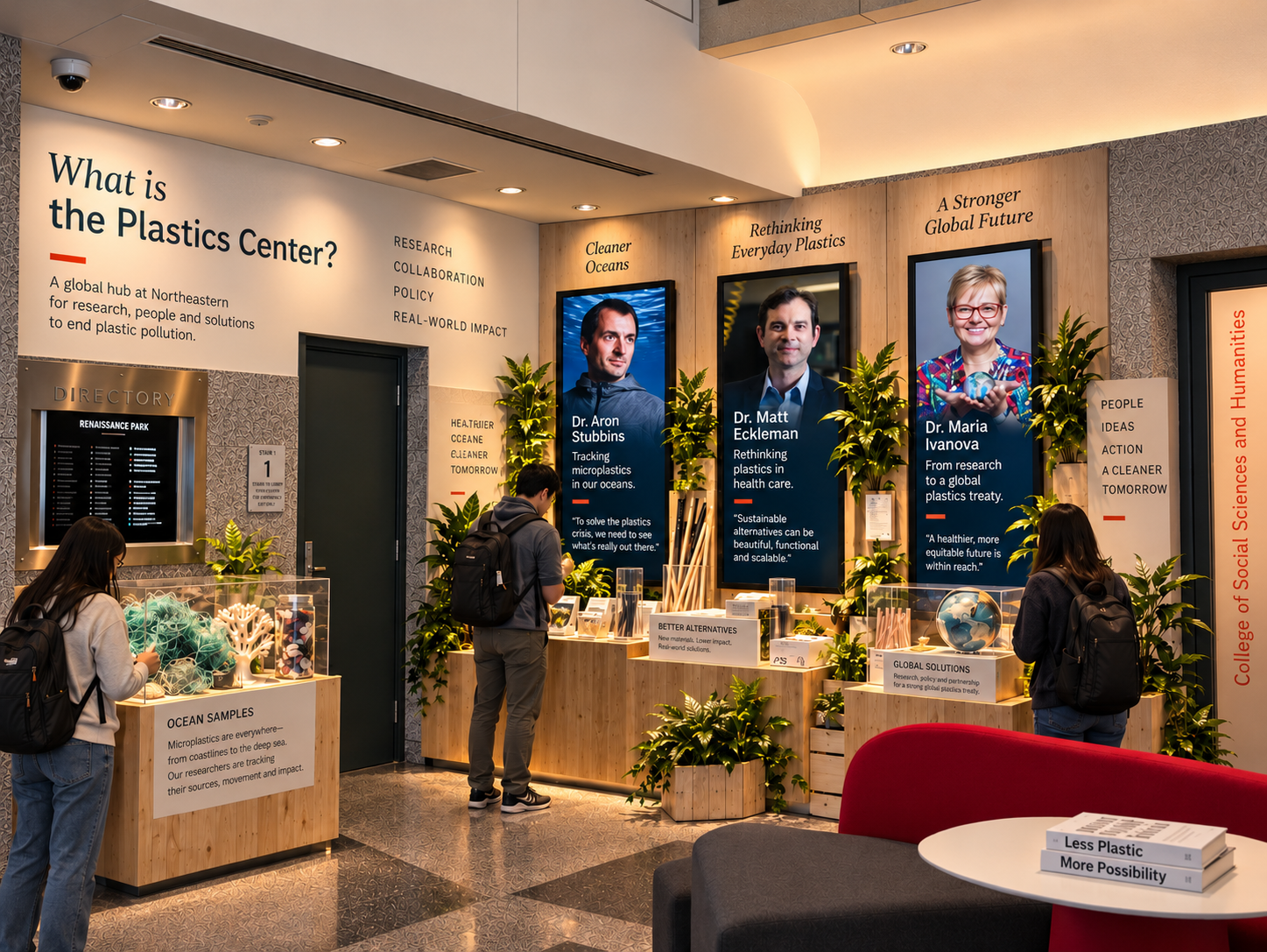
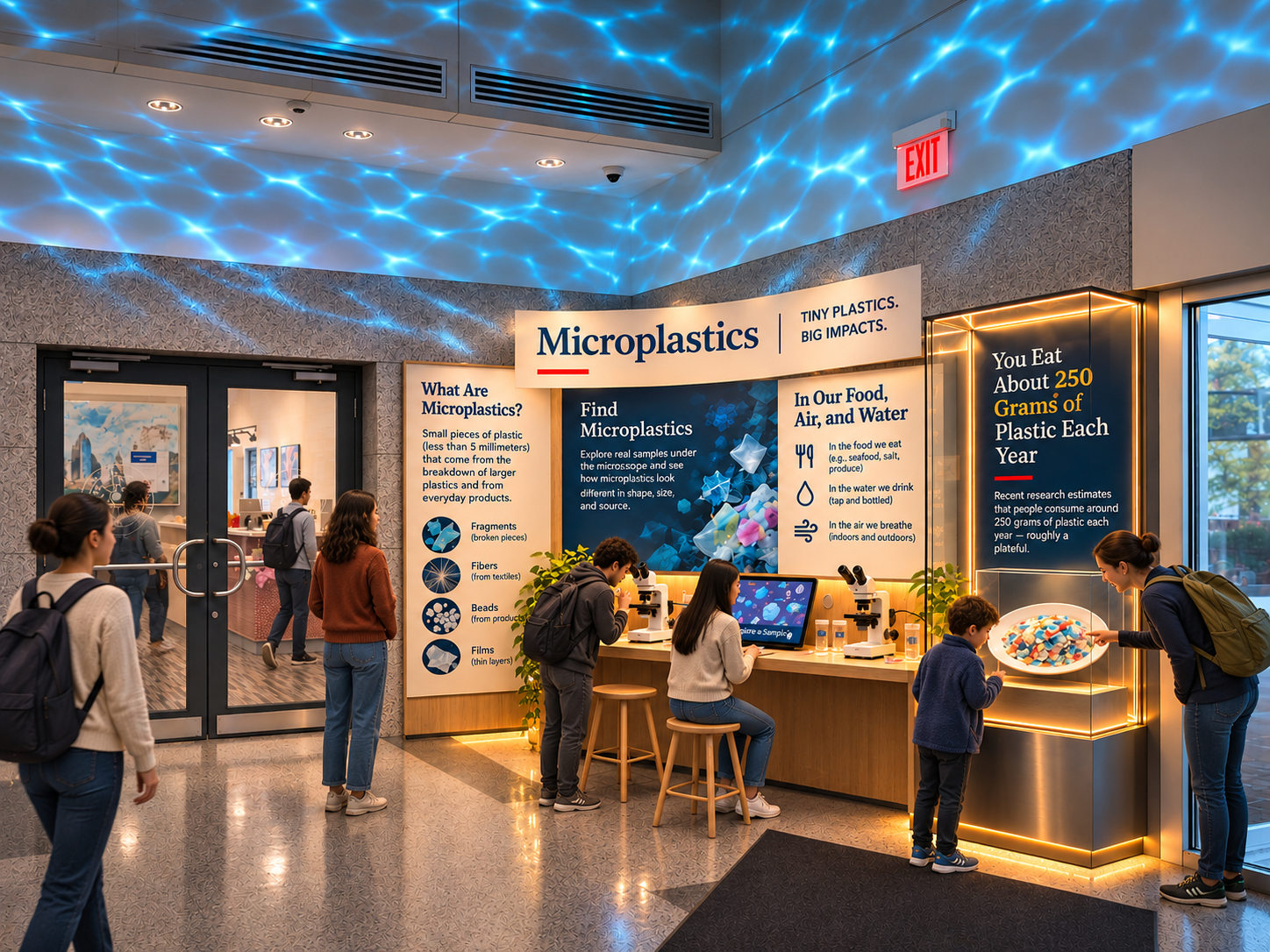
The exhibition will introduce The Plastics Center through interactive encounters with the work of three Northeastern researchers. Aron Stubbins studies how plastics move through and break down in the environment, including how microplastics affect the ocean’s ability to store carbon. A dedicated microplastics station will invite visitors to investigate this largely invisible world. Matt Eckelman examines the environmental impacts of materials across their full life cycles, offering tools to ask whether replacing plastic with another material actually results in a more sustainable choice.
Maria Ivanova’s work explores how public policy and international cooperation can address plastic pollution, drawing on her involvement with Rwanda and global plastics treaty negotiations. Her policy station will include Material Futures, an interactive treaty game on an iPad that puts visitors in the driver’s seat of a UN plastics treaty negotiation, challenging them to navigate competing interests and build an agreement.
In Our Campus, Unwrapped, students will become researchers and investigators themselves, tracing the disposable plastics used across campus and exploring possible alternatives. The campus becomes both the subject of the exhibition and a testing ground for change: a place to ask what can be eliminated, what can be replaced, and what requires a more fundamental rethink.
At the heart of the installation will be a forty-foot lion’s mane jellyfish created by sculptor and teaching professor Katy Rodden Walker from single-use plastics collected on campus. Video and soundscapes by artists from Northeastern’s College of Arts, Media and Design will animate the space, with graphic design by Jose Menendez.
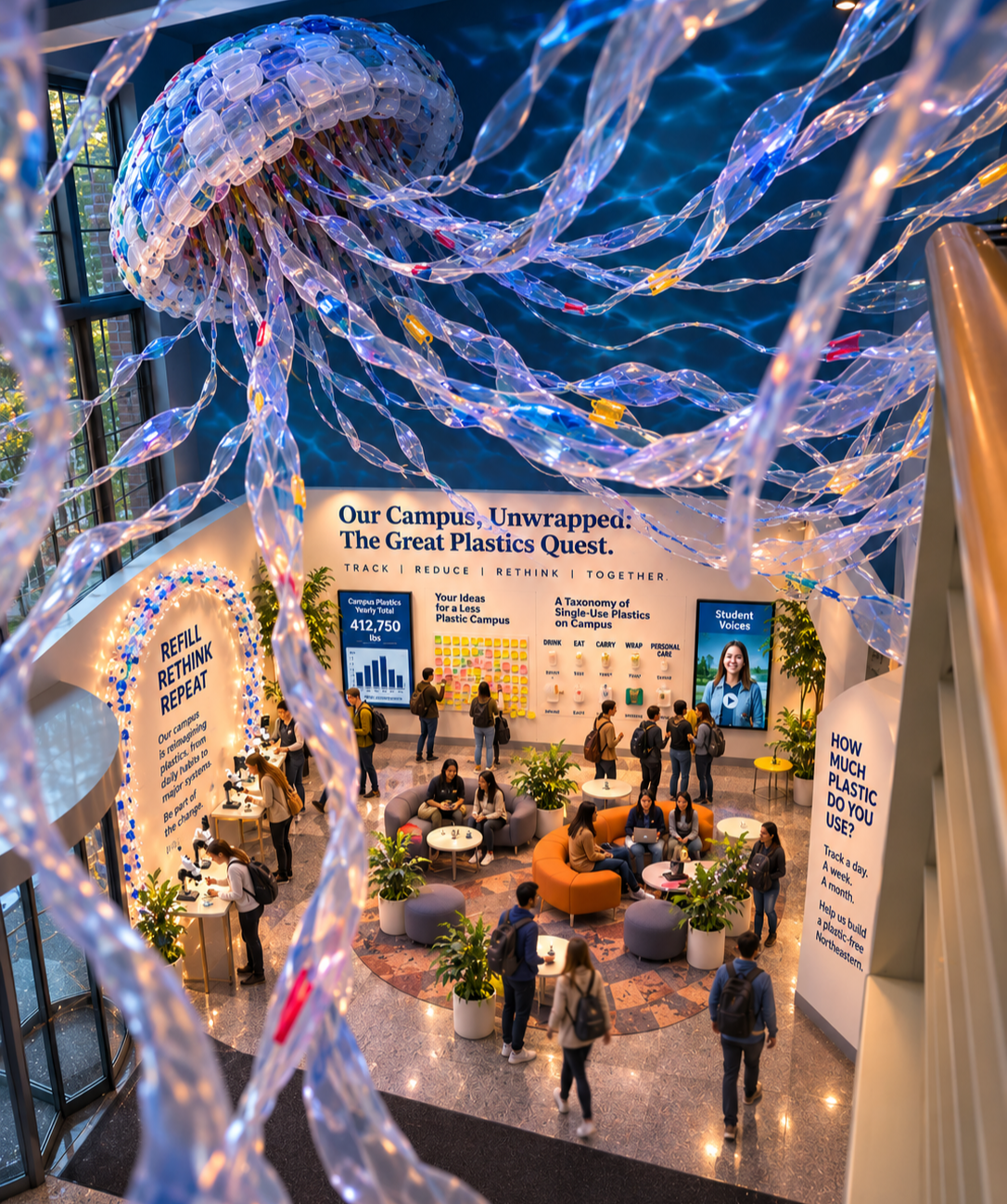
Building FoSCI’s work with Urban Rooms, Material Futures will explore how an everyday space can become a place of inquiry, investigation, and change-making. A university lobby becomes somewhere to linger, encounter research, contribute evidence, and imagine what the institution around you might become.