
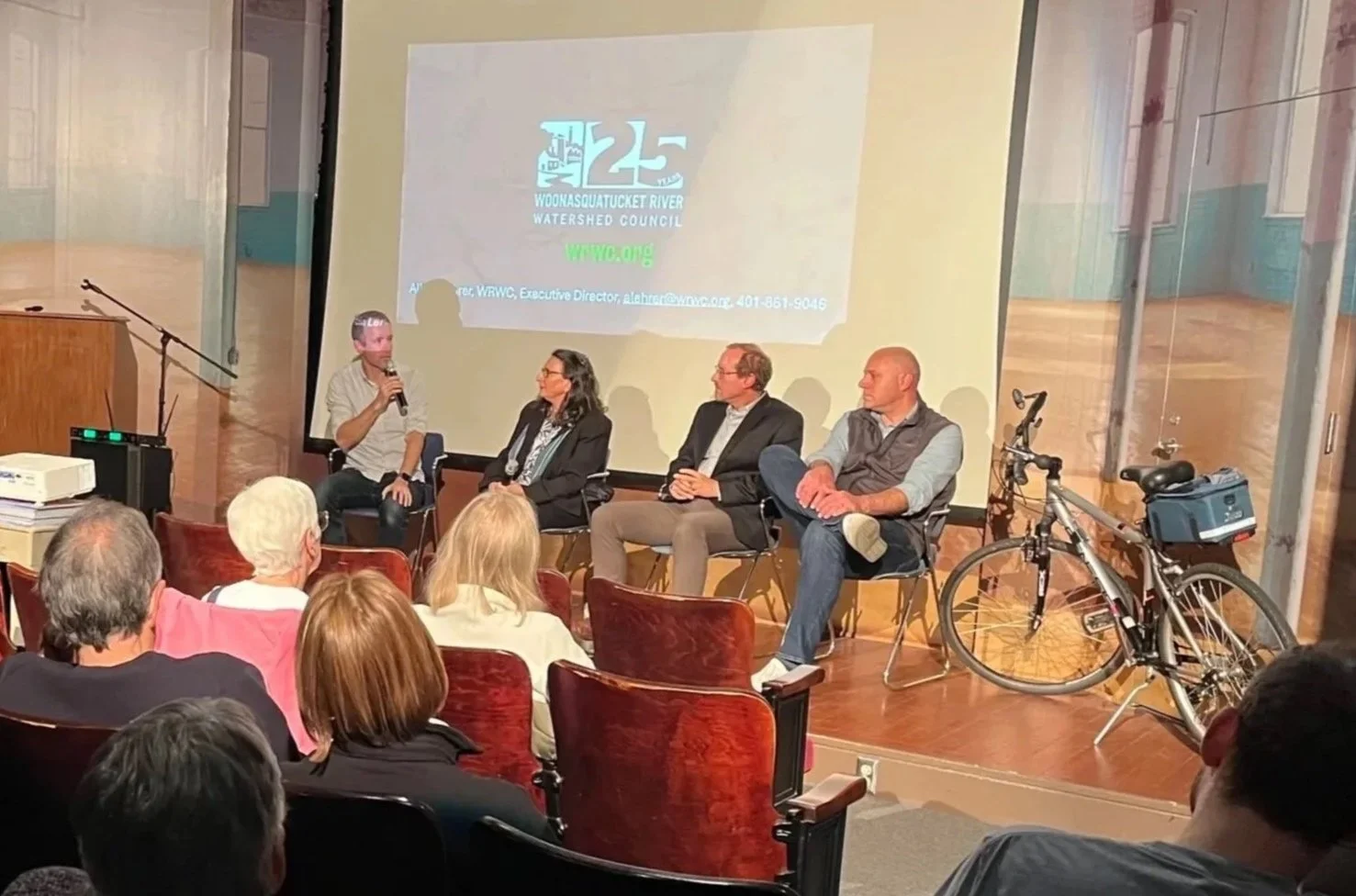
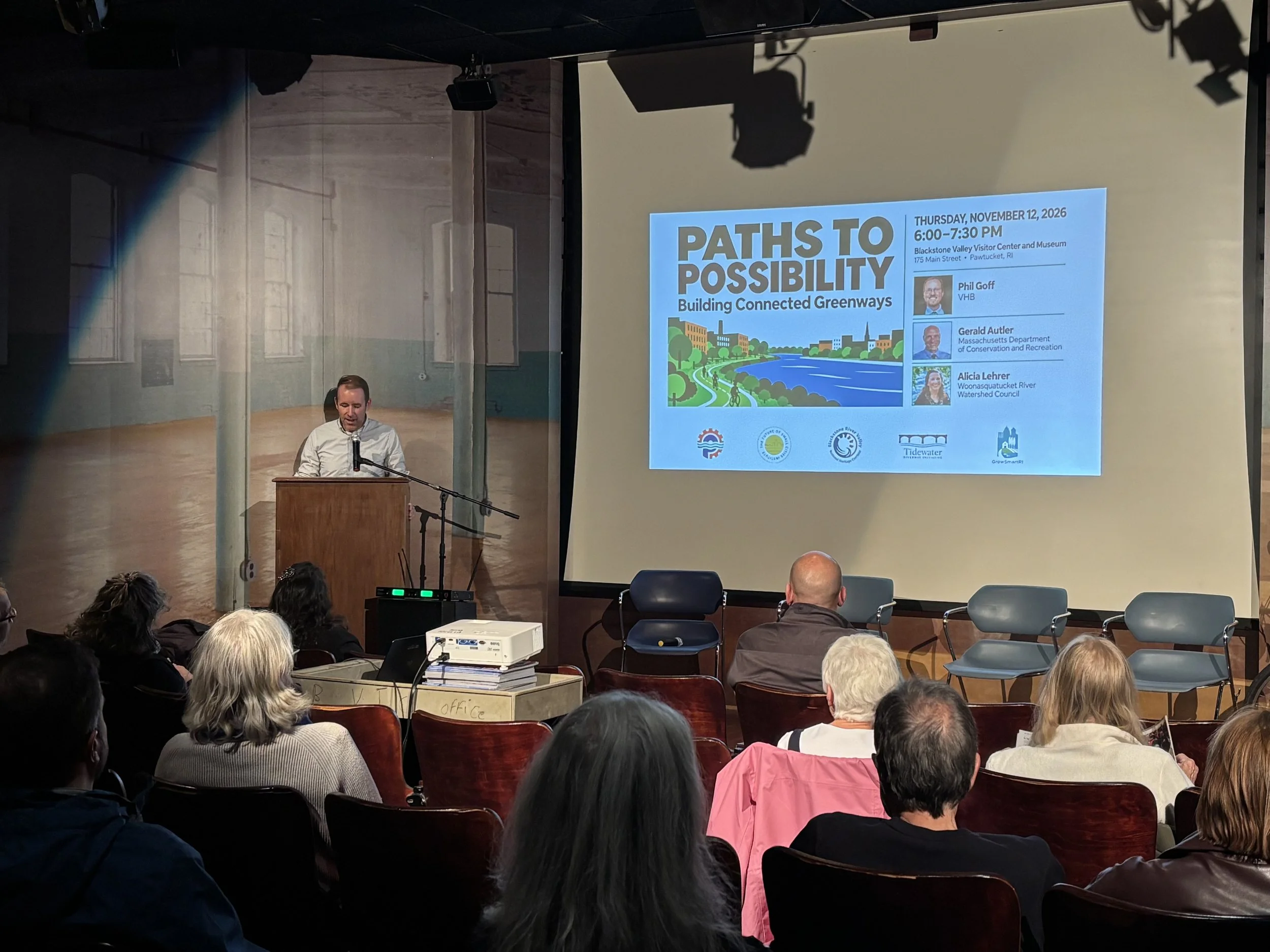
On November 12, the Future of Small Cities Institute brought together regional trail leaders and community members at the Blackstone Valley Visitor Center in Pawtucket for “Paths to Possibility: Building Connected Greenways.” Moderated by writer and Institute founder Reif Larsen, the evening explored the partnerships, public leadership, and shared imagination needed to connect our communities through trails.
The panel featured Phil Goff of VHB, bringing experience working on New York’s Empire State Trail; Gerald Autler, Director of Trails and Greenways at the Massachusetts Department of Conservation and Recreation; and Alicia Lehrer, Executive Director of the Woonasquatucket River Watershed Council. Their work offered complementary perspectives on connecting difficult urban trail segments, planning statewide networks, and sustaining community partnerships around a river.
The event came at an important moment for the Blackstone River Bikeway, as five cities begin working together to address the seven-mile on-road gap between the existing route in Cumberland and the East Bay Bike Path at India Point Park. Completing this connection builds on decades of advocacy and investment while requiring cooperation across municipal boundaries, industrial landscapes, and competing demands on urban space.
The evening’s central question extended beyond how to build a path: How can these connections become lasting community assets? Greenways bring together transportation and recreation with opportunities for river restoration, education, neighborhood life, and a deeper understanding of place. They are routes through our region’s history and spaces where its next chapter can take shape.
Thank you to Phil, Gerald, Alicia, our event sponsors—The City of Pawtucket, The Blackstone River Valley Heritage Corridor, The Blackstone Valley Tourism Council, the Tidewater Riverway Initiative, and GrowSmart RI—and everyone who joined us. We look forward to carrying this conversation into the work ahead.